If you notice, I have changed the format, background, and colors of text on my blog. Why, might you ask?
First off, I changed the format/orientation of my pages because I thought it made it much more pleasing to the eye and a lot easier to read. As I write more blogs, I want my readers to be able to read them with ease and with no problems.
After changing the format of my blog, I decided to change my background to something that wasn’t so cliché and, once again, made my blog easier to read. I chose a background of an elephant. The background itself doesn’t look like a plain image of an elephant because it is zoomed in to show the texture of the elephant’s skin. I felt as if this background was earthy and gave my blog a different feel. Not to mention, I love elephants!
Lastly, I had to adjust the font color of my blog because it was blending in with the background.
Hopefully these changes will make my blog easier to read and more user-friendly!
Tuesday, September 27, 2011

Sunday, September 25, 2011
It's Fall!
I am very excited that it is finally fall. It's my favorite season of the year.
These are just a few reasons why I love Fall!
Fall
Reasons I love Fall
- Apple Cider
- Leaves Changing
- Halloween
- Carmel Apples
- Pumpkin Carving
- Sweaters
- Thanksgiving
- Pumpkin Spice Coffee
These are just a few reasons why I love Fall!
Tuesday, September 20, 2011
Polemic: Right or Wrong?
When reading Technology and Literacy in the Twenty-First Century, Cynthia Selfe introduces her thoughts on polemic. By definition, polemic is a variety of arguments or controversies made against one opinion, doctrine, or person, or a strong verbal or written attack on someone or something. So in her book, Selfe poses two arguments about the link between technology and literacy.
Selfe describes the two arguments as boon, the way in which humans use technology to further progress interaction and communication amongst each other. The other argument or representation is bane, which describes how technology has caused a negative impact on communication, reading and writing skills, etc.
So what's the problem with polemic? Selfe creates this argument that it's so black and white. It's either one way or the other. However, I feel as though technology can impact a person in the way they allow it to. There is definitely some gray area in between these arguments that Selfe doesn't address.
Selfe describes the two arguments as boon, the way in which humans use technology to further progress interaction and communication amongst each other. The other argument or representation is bane, which describes how technology has caused a negative impact on communication, reading and writing skills, etc.
So what's the problem with polemic? Selfe creates this argument that it's so black and white. It's either one way or the other. However, I feel as though technology can impact a person in the way they allow it to. There is definitely some gray area in between these arguments that Selfe doesn't address.
Sunday, September 18, 2011
Language and the Way We Think

While reading an article by Lera Boroditsky called, "How Does Our Language Shape the Way We Think?" I was interested, but not surprised. Boroditsky brings up interesting arguments and examples of how people who speak different languages think, well, differently.
Boroditsky states that language effects the way we think about space, time, colors, and objects. She also says that other studies have found that languages effect how people "construe events, reason about causality, keep track of number, understand material substance, perceive and experience emotion, reason about other people's minds, choose to take risks, and even in the way they choose professions and spouses." To me, that seems like a lot of stuff language can effect.
That's incredible!
According to Boroditsky, "it's possible that everyone thinks the same way, notices the same things, but just talks differently." But to me, it is obvious that the thinking process in which one uses to speak different languages is vastly different than others. When you have to go through a slew of processes just to read one sentence in one language, but a completely different thought process to read the same sentence in a different language, there is a difference there.
Language also plays a role in how we learn other languages. "everyone does not pay attention to the same things: if everyone did, one might think it would be easy to learn to speak other languages. Unfortunately, learning a new language (especially one not closely related to those you know) is never easy; it seems to require paying attention to a new set of distinctions. . . it requires paying attention to the right things in the world so that you have the correct information to include in what you say." When learning a new language, you have to acquire a completely new thinking process that may be completely novel to you. That's why learning languages can be so challenging for so many people. It's not just the words you have to remember, but it's the thinking process that you need to get you there.
This article completely fascinates me. As an English teacher, I need to be aware of these kind of things to better understand my subject, but especially my future students. There will be times that I have students and there might be a language barrier. Understanding their thinking process will make it much easier for me to explain things to them, understand their homework, and most important, to understand them.
"But what would your life be like if you had never learned a language? Could you still have friends, get an education, hold a job, start a family? Language is so fundamental to our experience, so deeply a part of being human, that it's hard to imagine life without it." -Lera Boroditsky
Tuesday, September 13, 2011
And You Thought Text Message Break-Ups Were Bad...
Ever felt like you were stuck in a relationship and just couldn't find the right way to tell that person you just weren't interested anymore? Well, for those who live in China, they don't have to worry about how to break up with someone. They simply pay someone to do the breaking up for them. How crazy is that?
People in China are paying people, sometimes quite a large amount, to do the dirty work for them. They have them send a heartfelt e-mail or by some other means and let them know that they just don't want to be with them anymore.
As if there weren't anymore pathetic ways to break up with someone, you can now simply pay people to do it for you. Facebook, text-messages, twitter, now a "break-up agent." Technology is ruining romance, relationships, and chivalry.

Want more details? Read the original blog post here.
Sunday, September 11, 2011
How Has Technology Been Affected By 9/11?
 It has been ten years since the terrorist attacks of 9/11. Many people have spent this weekend reflecting this day in history and how it has impacted our country and the rest of the world. While many thought of where they were and how their lives have changed since, I had this and so much more on my mind. One thing that I focused on was how technology has changed our lives since 9/11.
  One major form of technology that has changed is security. Everyone knows that when you go to the airport today, it is incredibly difficult to get through security. There have been new metal detectors and x-ray machines that have been implemented. There have been many complaints and news stories about how airport security has affected people. Although airport security can be a hassle, I think it’s important that we remember how important airport security is and why it is there today.
 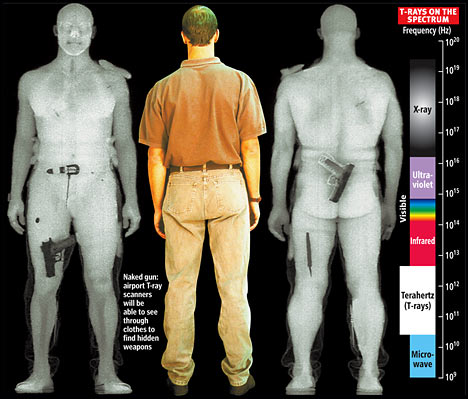 The government has also started using biometric screening tools that help to regulate border security and visas more effectively. This system uses fingerprints and photographic images to identify people that enter the United States. There is a similar system used in order to leave the country. Because of this regulation, our government has found two of the hijackers that were involved in 9/11 (Ember 1).
I think we should all remember how important the measures are that are being taken in order to prevent or try and prevent from what has happened before, happening again.
Rhetoric Reflection
Rhetoric is used in writing, speeches, and many other forms of communication. Given the definition of rhetoric, situated, strategic discourse, I want to sift through this and come to a few valid conclusions.
 To me, this definition has a few meanings. If it is situated, it is organized or thought out in an organized manner. Being strategic can mean a lot of things. To me, in regards to rhetoric, one is strategic in order to carefully plan their thoughts and feelings in order to get a specific outcome. The outcome can be many different things. It could be persuasion, informative, etc. Lastly, we have discourse. Discourse in this situation means language in use.
Let’s put this all together. Situated, strategic discourse. Planned language in order to gain a specific outcome. Is this the meaning of rhetoric? It seems incredibly accurate. When writing and speaking, one must keep these aspects in mind in order to impress or persuade their audience.
Thursday, September 1, 2011
How Does Technology Affect Children Today?

When reading The Medium is the Massage, there was one idea that stuck out to me. Because I am an English Educaion Major, the discussion of technology's affect on children and their education seemed to be the most important to me. McLuhan states, "The child was an invention of the seventeenth century; he did not exist in, say, Shakespeare's day. He had, up until that time, been merged in the adult world and there was nothing that could be called childhood in our sense." McLuhan is exactly right. Up until the 18th century, children were perceived in a very different light than they are today. They were expected to act the same and even dress the same as adults.

Technological advances are partially if not one of the greatest influences on the way society views children today. A man, Rousseau, was the first to suggest that children were not little adults. He had the idea that children didn't think, act, or behave as adults did. His idea didn't catch on quickly, but when it did, it stuck. As time progressed, less and less was expected of children. By the 20th century, it was acceptable for children to behave and dress in the nature we see today.

Technology has shaped the way we perceive what is socially acceptable. McLuhan ends his education piece with this, "Today's child is growing up absurd, because he lives in two worlds, and neither of them inclines to grow up. Growing up--that is our new work, and it is total. Mere instruction will not suffice." I think this is the point where I disagree with McLuhan. I think technology has definitely had an impact on children today. However, to me, it seems as though McLuhan thinks that instruction and technology are two different worlds to children. Today classrooms are advancing and implementing technology just as quickly as everyone else is. There are many ways to use technology in the classroom, making these 'two worlds' relatively cohesive.
Subscribe to:
Posts (Atom)