Showing posts with label Technology. Show all posts

Tuesday, November 15, 2011

Ambient Findability

First off, what is findability? To me, findability is the ability to locate someone efficiently and effectively. Throughout technology today, there are many genres in which findability takes place. For example, you use findability when you “check-in” somewhere on your smart phone.

Twitter and facebook both have tools that you can adjust on your smartphones that let people state the location that they are posting from.
So what’s the use? Simple. Morville discusses this in his book. By making themselves accessible, people are able to locate them more effectively. For example, if you used the smart phone “check-in” tool at the mall and one of their friends was at the mall too. Their friend would then possibly locate them or be able to connect with them. However, if neither of them knew they were there, they might not ever connect. 

Thursday, November 10, 2011

The Future is Now

Every time a new gadget or technology tool comes out, my dad makes a reference to Star Trek. When skype came out, my dad was like, "People use to dream of this stuff! I remember when I was a kid and Star Trek was on.." So when reading Ambient Findability, I couldn't help but think, I'm living the future of generations before me. Some things that seemed so far away, I am experiencing now.

It's hard for me to think about the future because we currently have SO many advances in technology. But I do think there will be more tools to use. For example, watching CSI, you see a lot of potential technological advances. Holographic touch screen computers being one of them.

Comparing technology from 5 years ago to now seems crazy! The cell phones, computers, tvs, and everything have completely changed. It's going to be exciting to live in this technological age and see what else manifests in the next five years.

Sunday, October 23, 2011

Will Cable Become Obsolete?


In a USA Weekend article that I got out of the paper, it stated "Some people are ditching cable and satellite television- and their $75 average monthly tab. Instead, they're signing up for HULU Plus ($8 a month), Netflix streaming (another $8) for movies, and renting $1 DVDs from the Redbox in the supermarket. Not for you? You could still save by shedding premium channels and supplementing with some of these services - particularly if you are not watching many of them anyway. A recent Neilsen study showed Americans now have about 130 channels available on average, but they watch only 18."

So my question is this, with all of the new, more cost-friendly services that are available, will this have an impact on cable? Personally, I think this could be the case. Recently, all cable switched to digital from analog. Analog has become a thing of the past. This could happen to cable as well.

Sunday, October 2, 2011

Is Privacy Dead?

According to CNN, "Privacy is dead, and social media hold smoking gun." They believe that our constant need to capture and share every moment of our lives will diminish our privacy.

Recently, a U.K. firm is releasing a camera that was invented to capture every single moment of a person's life. It's worn on a cord around your neck and takes an image every thirty seconds. The camera costs $820.

CNN argues that this "life-logging device" posses many risks to our privacy from stalkers to identity theft. What happens if someone gets their hands on your camera? Their could be a plethora of pictures a thief could use to steal your identity or find out everything about you and stalk your life.

Many social networking sites pose the same issue. By constantly letting people in on multiple details of your life, providing your location, and uploading personal pictures, you have the chance of someone using these details to target you.

But this is my question. With articles like this CNN article, social networking users are heavily aware of the "risks" involved with social networking. Social networking is a great way to connect with people in a safe way, if you know what you're doing. If you manage your privacy settings and don't post incredible details about your life, you shouldn't have a problem.

Lastly, if you are on a social networking site, you shouldn't care much about privacy in the first place. When you let your 700 friends in on all the details of your life, how are you trying to be private? I believe social networking is a way for people to display these things about their life that they wouldn't always vocalize, but feel more comfortable behind a computer screen.

Read the CNN article here.

Tuesday, September 20, 2011

Polemic: Right or Wrong?

When reading Technology and Literacy in the Twenty-First Century, Cynthia Selfe introduces her thoughts on polemic. By definition, polemic is a variety of arguments or controversies made against one opinion, doctrine, or person, or a strong verbal or written attack on someone or something. So in her book, Selfe poses two arguments about the link between technology and literacy.

Selfe describes the two arguments as boon, the way in which humans use technology to further progress interaction and communication amongst each other. The other argument or representation is bane, which describes how technology has caused a negative impact on communication, reading and writing skills, etc.

So what's the problem with polemic? Selfe creates this argument that it's so black and white. It's either one way or the other. However, I feel as though technology can impact a person in the way they allow it to. There is definitely some gray area in between these arguments that Selfe doesn't address.

Sunday, September 18, 2011

Language and the Way We Think


While reading an article by Lera Boroditsky called, "How Does Our Language Shape the Way We Think?" I was interested, but not surprised. Boroditsky brings up interesting arguments and examples of how people who speak different languages think, well, differently.

Boroditsky states that language effects the way we think about space, time, colors, and objects. She also says that other studies have found that languages effect how people "construe events, reason about causality, keep track of number, understand material substance, perceive and experience emotion, reason about other people's minds, choose to take risks, and even in the way they choose professions and spouses." To me, that seems like a lot of stuff language can effect.

That's incredible!

According to Boroditsky, "it's possible that everyone thinks the same way, notices the same things, but just talks differently." But to me, it is obvious that the thinking process in which one uses to speak different languages is vastly different than others. When you have to go through a slew of processes just to read one sentence in one language, but a completely different thought process to read the same sentence in a different language, there is a difference there.

Language also plays a role in how we learn other languages. "everyone does not pay attention to the same things: if everyone did, one might think it would be easy to learn to speak other languages. Unfortunately, learning a new language (especially one not closely related to those you know) is never easy; it seems to require paying attention to a new set of distinctions. . . it requires paying attention to the right things in the world so that you have the correct information to include in what you say." When learning a new language, you have to acquire a completely new thinking process that may be completely novel to you. That's why learning languages can be so challenging for so many people. It's not just the words you have to remember, but it's the thinking process that you need to get you there.

This article completely fascinates me. As an English teacher, I need to be aware of these kind of things to better understand my subject, but especially my future students. There will be times that I have students and there might be a language barrier. Understanding their thinking process will make it much easier for me to explain things to them, understand their homework, and most important, to understand them.


"But what would your life be like if you had never learned a language? Could you still have friends, get an education, hold a job, start a family? Language is so fundamental to our experience, so deeply a part of being human, that it's hard to imagine life without it." -Lera Boroditsky

Tuesday, September 13, 2011

And You Thought Text Message Break-Ups Were Bad...


Breaking Up is Hard to Do


Ever felt like you were stuck in a relationship and just couldn't find the right way to tell that person you just weren't interested anymore? Well, for those who live in China, they don't have to worry about how to break up with someone. They simply pay someone to do the breaking up for them. How crazy is that?

People in China are paying people, sometimes quite a large amount, to do the dirty work for them. They have them send a heartfelt e-mail or by some other means and let them know that they just don't want to be with them anymore.

As if there weren't anymore pathetic ways to break up with someone, you can now simply pay people to do it for you. Facebook, text-messages, twitter, now a "break-up agent." Technology is ruining romance, relationships, and chivalry.


Want more details? Read the original blog post here.

Sunday, September 11, 2011

How Has Technology Been Affected By 9/11?

It has been ten years since the terrorist attacks of 9/11. Many people have spent this weekend reflecting this day in history and how it has impacted our country and the rest of the world. While many thought of where they were and how their lives have changed since, I had this and so much more on my mind. One thing that I focused on was how technology has changed our lives since 9/11.


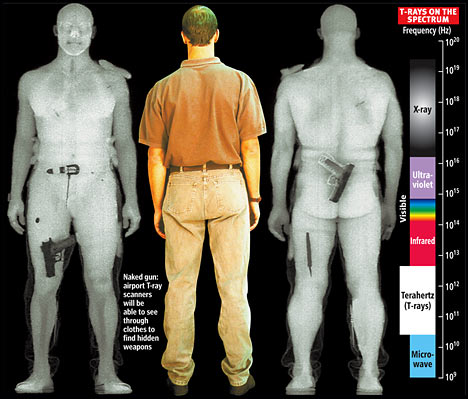
One major form of technology that has changed is security. Everyone knows that when you go to the airport today, it is incredibly difficult to get through security. There have been new metal detectors and x-ray machines that have been implemented.  There have been many complaints and news stories about how airport security has affected people. Although airport security can be a hassle, I think it’s important that we remember how important airport security is and why it is there today.


The government has also started using biometric screening tools that help to regulate border security and visas more effectively. This system uses fingerprints and photographic images to identify people that enter the United States. There is a similar system used in order to leave the country. Because of this regulation, our government has found two of the hijackers that were involved in 9/11 (Ember 1).


I think we should all remember how important the measures are that are being taken in order to prevent or try and prevent from what has happened before, happening again. 


Thursday, September 1, 2011

How Does Technology Affect Children Today?


When reading The Medium is the Massage, there was one idea that stuck out to me. Because I am an English Educaion Major, the discussion of technology's affect on children and their education seemed to be the most important to me. McLuhan states, "The child was an invention of the seventeenth century; he did not exist in, say, Shakespeare's day. He had, up until that time, been merged in the adult world and there was nothing that could be called childhood in our sense." McLuhan is exactly right. Up until the 18th century, children were perceived in a very different light than they are today. They were expected to act the same and even dress the same as adults.


Technological advances are partially if not one of the greatest influences on the way society views children today. A man, Rousseau, was the first to suggest that children were not little adults. He had the idea that children didn't think, act, or behave as adults did. His idea didn't catch on quickly, but when it did, it stuck. As time progressed, less and less was expected of children. By the 20th century, it was acceptable for children to behave and dress in the nature we see today. 


Technology has shaped the way we perceive what is socially acceptable. McLuhan ends his education piece with this, "Today's child is growing up absurd, because he lives in two worlds, and neither of them inclines to grow up. Growing up--that is our new work, and it is total. Mere instruction will not suffice." I think this is the point where I disagree with McLuhan. I think technology has definitely had an impact on children today. However, to me, it seems as though McLuhan thinks that instruction and technology are two different worlds to children. Today classrooms are advancing and implementing technology just as quickly as everyone else is. There are many ways to use technology in the classroom, making these 'two worlds' relatively cohesive.

Tuesday, August 30, 2011

Is the Internet Making Us Dumb?

I recently read two articles that contained opposing viewpoints. Shirky believes that the internet is increasing human intelligence because we have digital media at our fingertips. On the other hand, Carr suggests that the internet and/or Google is causing people to be disengaged and poor readers. So the question is this: Where do I stand? As an avid user of internet, google, and many different forms of technology, I agree with Shirky.

With technology, people have the opportunity to further their knowledge at any point. We have a wealth of information at our fingertips. Shirky points out, “We are living through a similar explosion of publishing capability today, where digital media link over a billion people into the same network. This linking together in turn lets us tap our cognitive surplus, the trillion hours a year of free time the educated population of the planet has to spend doing things they care about. In the 20th century, the bulk of that time was spent watching television, but our cognitive surplus is so enormous that diverting even a tiny fraction of time from consumption to participation can create enormous positive effects.” We may not obtain all information from the internet. Like Shirky says, people spend much of their time watching television. However, they are still learning more than ever before. 

In a world where technology is constantly changing and advancing, people are required to stay on their toes. The advancement of technology is encouraging people to think in different ways and further their education, not only technologically, but in other areas as well. Shirky states, “The past was not as golden, nor is the present as tawdry, as the pessimists suggest, but the only thing really worth arguing about is the future. It is our misfortune, as a historical generation, to live through the largest expansion in expressive capability in human history, a misfortune because abundance breaks more things than scarcity.” Shirky is right. We have the opportunity to look to the future as we better ourselves and further our education.